
Below are 4 images representing a draft layout for Involucrata starting from overheard and moving layer by layer through the “canopy” until we reach the “forest floor”. The 5th image represents a small green wall that may or not be included in the final piece. The current plan is for the exhibit to open early to mid June 2022.
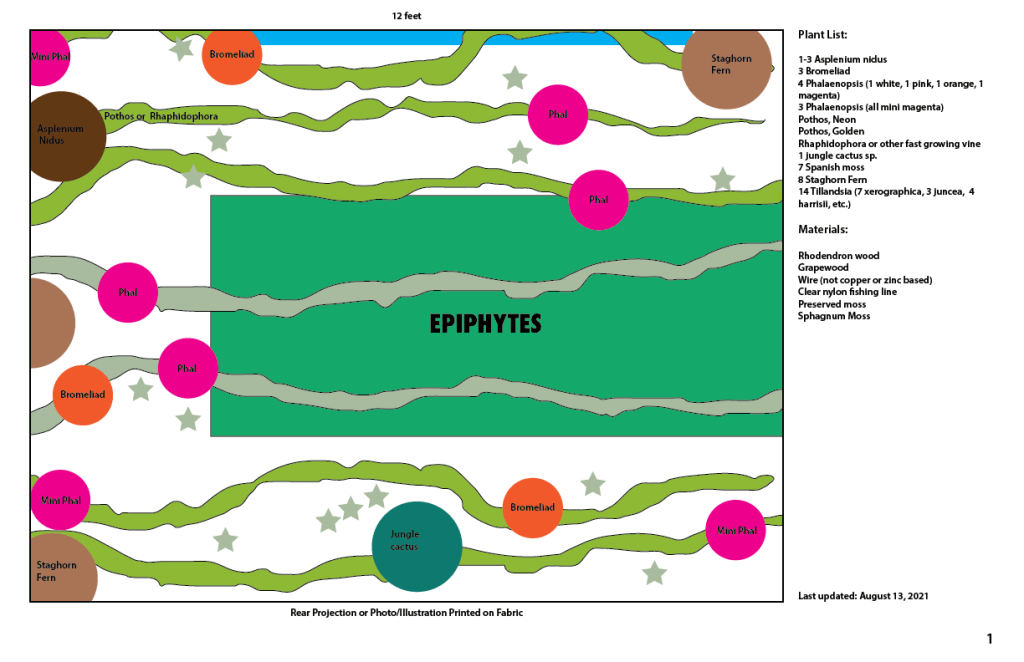
The epiphyte layer will hover around 9-10 feet overhead. Plant list: Orchids, various species of epiphytic fern, bromeliads, tillansdsia, pothos, and jungle cactus. Assuming no plant casualties, I need only 1 bromeliad and 1 rhaphidophora to complete this layer! Gotta catch ’em all.

Of all the plants listed in the “Head height and above” layer, I’m most excited to play with Gunnera (a.k.a. dinosaur food). I’m intimidated by its size and water requirements, but it grows to a mature size within 1-2 years as opposed to 5-8 as some of the other specimens chosen for the project. I ordered one “small” start of Gunnera manicata this week just so I can wrap my head around its needs and eccentricities.
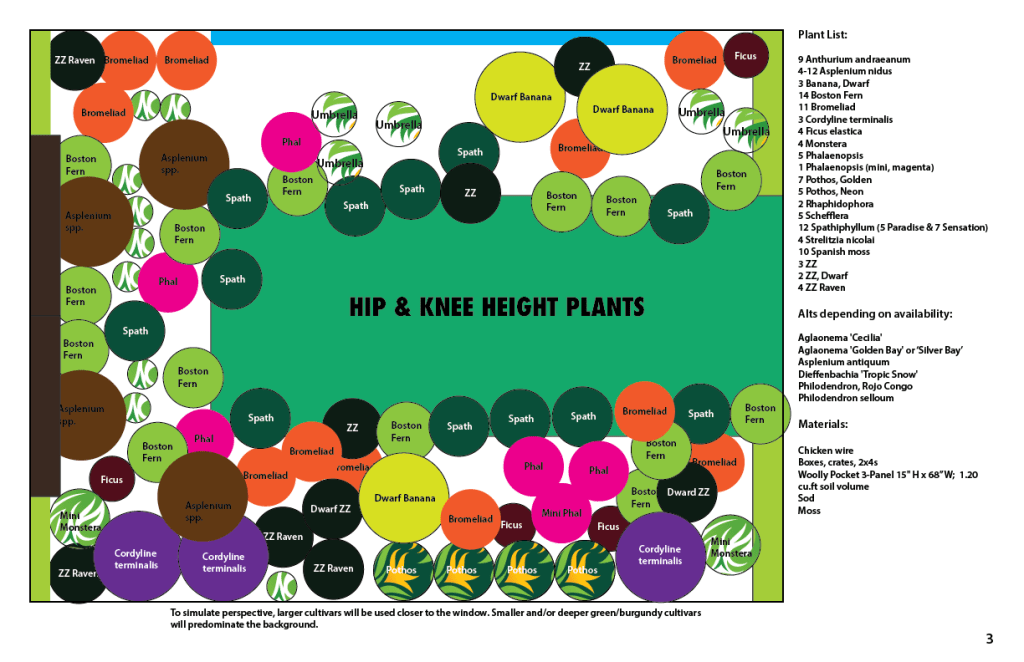
This layer will need the most editing and adjusting, I suspect. I worry that the feeling imparted will be claustrophobic as opposed to pleasantly encompassing. There is also a question of how much clustering of species is required to look “natural” to the eye. Would it be better to have fewer species and more of the same plant.
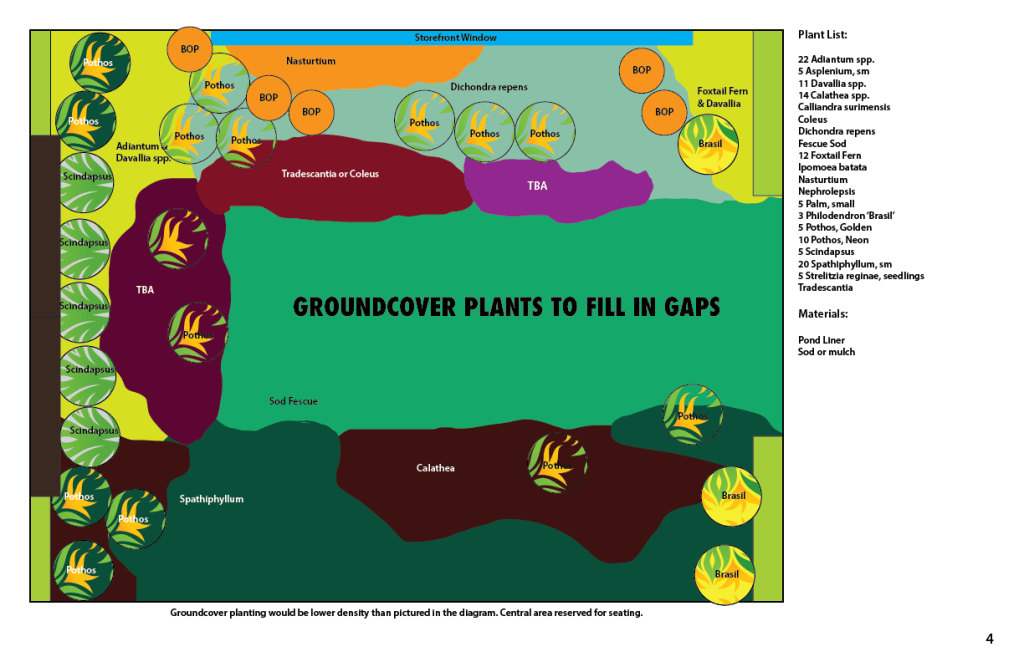
I’m most used to growing plants in pots and concentrating on vertical growth. I have less experience trying to get plants to spread horizontally across a surface. Initials trials have been abysmal failures. Who kills a tradescantia?!
My initial idea for the central green space was to use sod fescue, my favorite grass for sitting and lounging. I may need to revisit that since sod may be sub-optimal for folks with mobility challenges.

 Punk Tropicale