Rousseau thrilled the art world with his naive and almost psychedelic visions of exotic jungles. The artist, who never left Paris, drew his inspiration from the city’s botanical gardens. Experience a magical night in [les grandes serres du Jardin des Plantes] brought to life by the painter’s visions. Once the last visitors have left, the greenhouse reveals its secrets with the gradual emergence of a dream-like world of fantastic plants and imaginary animals.
Based on The Dream by Henri Rousseau
Writer and Director: Nicolas Autheman
Original Music: Fabien Bourdier
Coproduction: ARTE France, Les Films du Tambour de Soie
Gorilla diorama in the Hall of African Mammals at the American Museum of Natural History in NY. Photo by Kathryn Carse.
Location: Hall of African Mammals at the American Museum of Natural History in NY.
Creator: Background by William R. Leigh, assisted by Robert Kane. Foreground by Albert E. Butler, assisted by Joseph Guerry, George Frederick Mason, Ushinosuke Narahara, George Petersen, and Fred Scherer. Taxidermy by Carl Akeley.
A Masterclass for the Culture in Quarantine Series, self-filmed in her South London studio. Using paper, scissors and glue, Es Devlin guides viewers through the process of turning ideas into forms from broad research and initial sketches to physical projection-mapped sculpture.
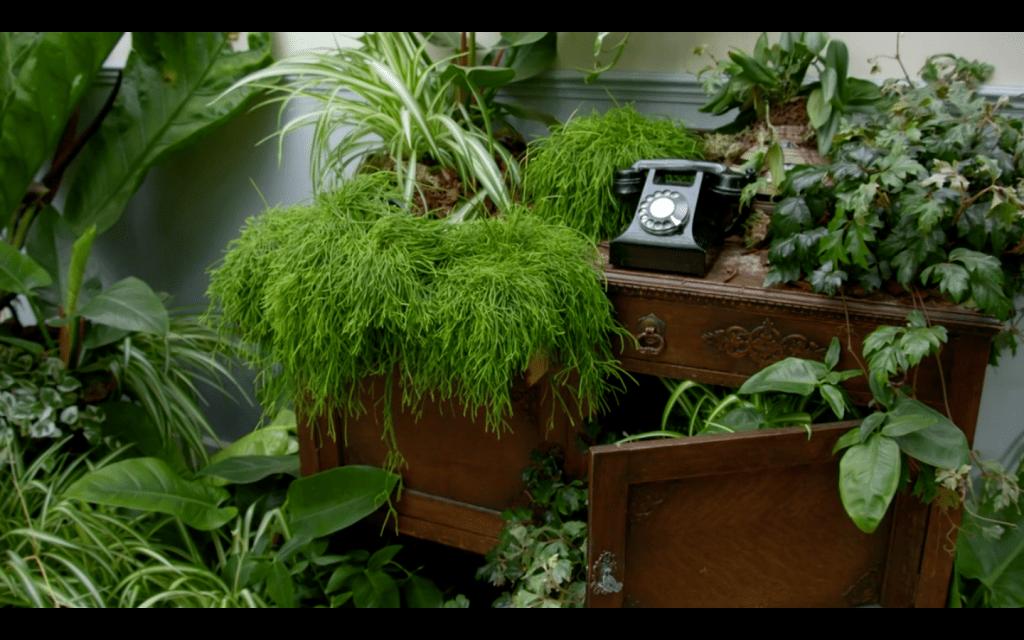
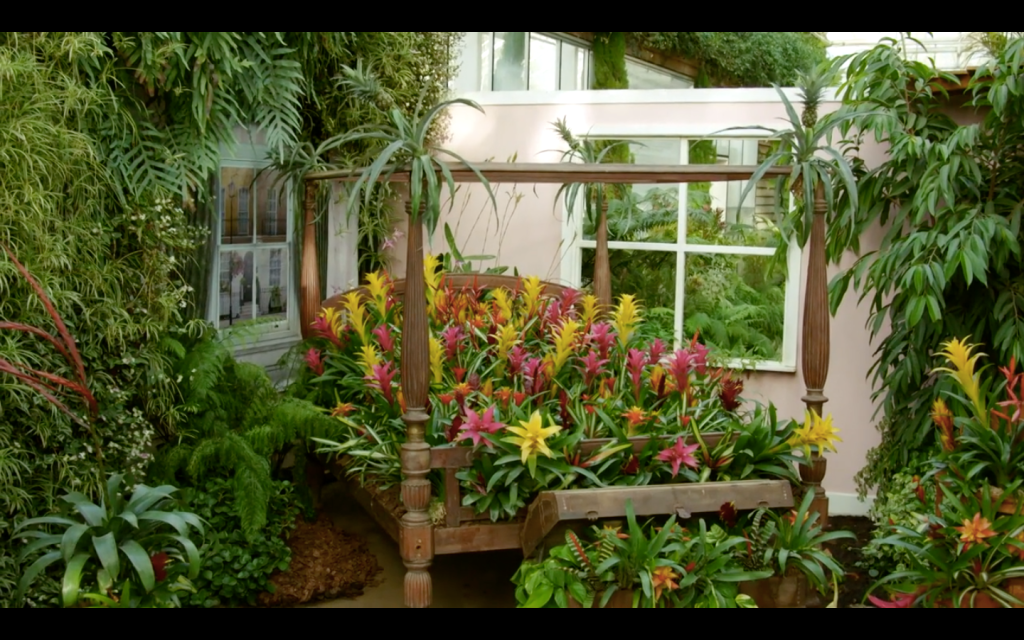
Candide Gardening gives us a tour of the Giant Houseplant Takeover, a temporary exhibit inside the Glasshouse at RHS Garden Wisley.
In Gardeners’ World 2020 episode 1, presenter Frances Tophill also visits the exhibition. Click here to watch the clip.
Gardeners’ World 2020 Episode 1 (26 March 2020). Screen grab.Gardeners’ World 2020 Episode 1 (26 March 2020). Screen grab.Gardeners’ World 2020 Episode 1 (26 March 2020). Screen grab.
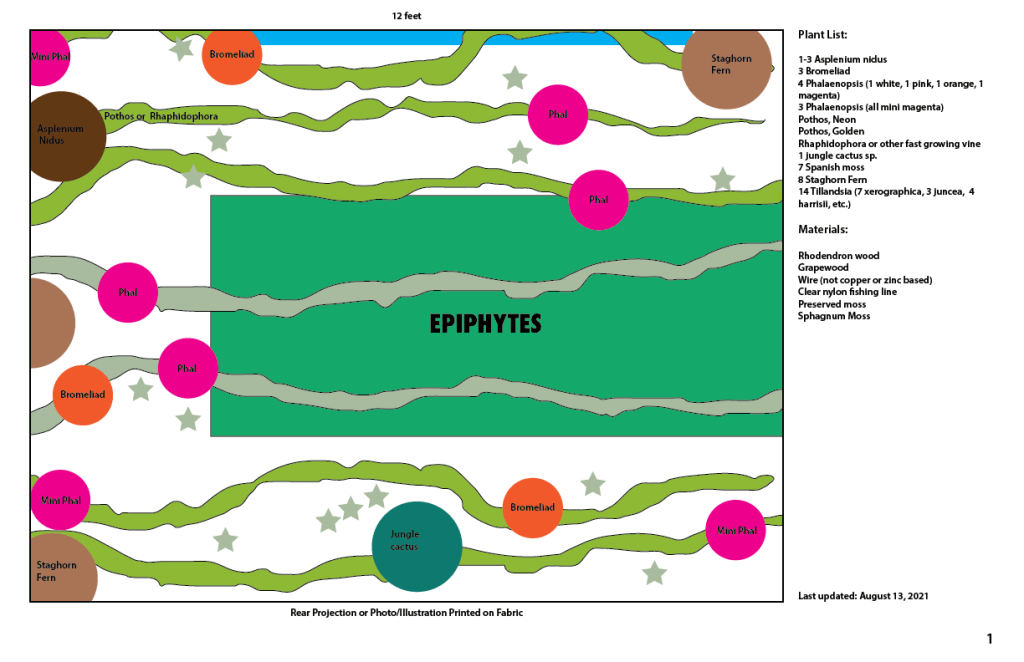
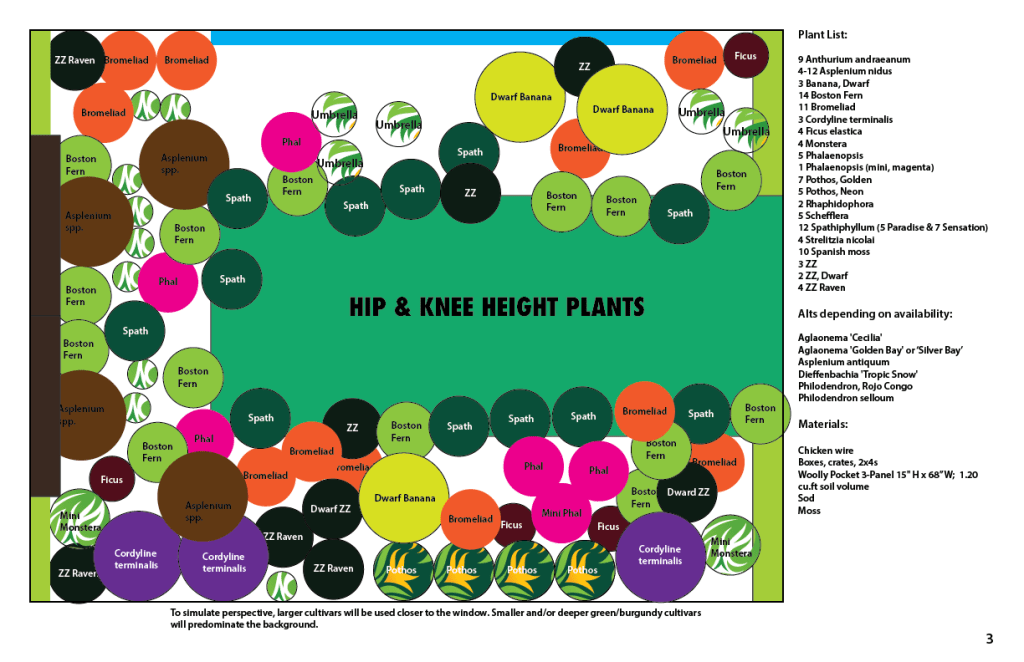
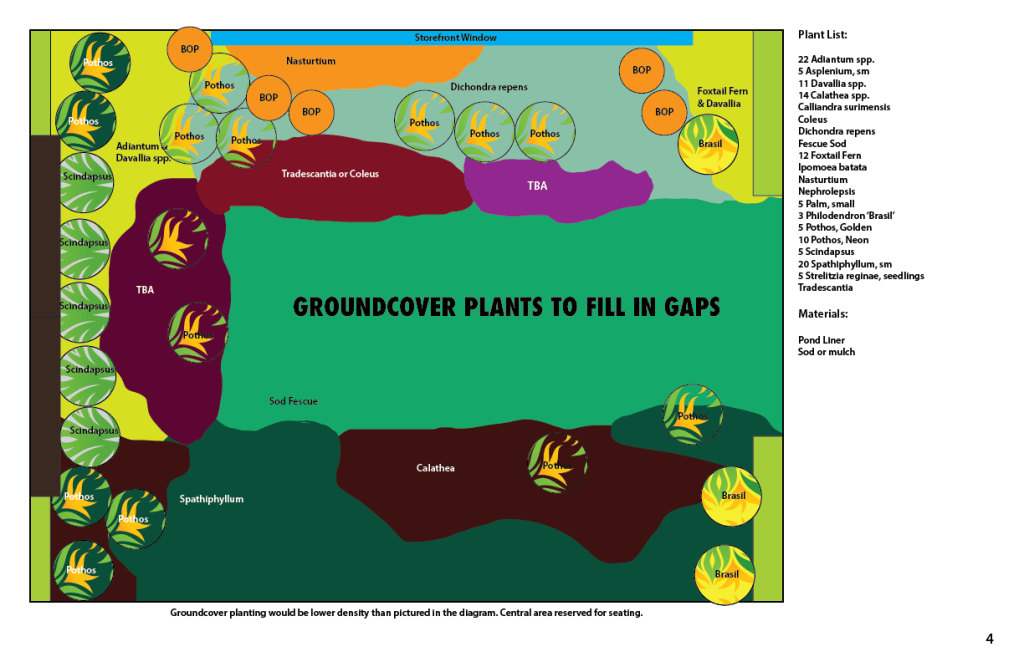
Below are 4 images representing a draft layout for Involucrata starting from overheard and moving layer by layer through the “canopy” until we reach the “forest floor”. The 5th image represents a small green wall that may or not be included in the final piece. The current plan is for the exhibit to open early to mid June 2022.
The epiphyte layer will hover around 9-10 feet overhead. Plant list: Orchids, various species of epiphytic fern, bromeliads, tillansdsia, pothos, and jungle cactus.
The epiphyte layer will hover around 9-10 feet overhead. Plant list: Orchids, various species of epiphytic fern, bromeliads, tillansdsia, pothos, and jungle cactus. Assuming no plant casualties, I need only 1 bromeliad and 1 rhaphidophora to complete this layer! Gotta catch ’em all.
Head height and above plants. These plants will top out at 5-7 feet tall or, in the case of epiphytes, be arranged at approximately eye level. Plant list: Orchids, bromeliads, tillansdsia, palm, strelitzia, heliconia, various liana, and gunnera. Gunnera is the real wild card of this bunch and a species I expect to have real challenges working with.
Of all the plants listed in the “Head height and above” layer, I’m most excited to play with Gunnera (a.k.a. dinosaur food). I’m intimidated by its size and water requirements, but it grows to a mature size within 1-2 years as opposed to 5-8 as some of the other specimens chosen for the project. I ordered one “small” start of Gunnera manicata this week just so I can wrap my head around its needs and eccentricities.
Hip and Knee Height plants.
This layer will need the most editing and adjusting, I suspect. I worry that the feeling imparted will be claustrophobic as opposed to pleasantly encompassing. There is also a question of how much clustering of species is required to look “natural” to the eye. Would it be better to have fewer species and more of the same plant.
Groundcover plants to fill gaps.
I’m most used to growing plants in pots and concentrating on vertical growth. I have less experience trying to get plants to spread horizontally across a surface. Initials trials have been abysmal failures. Who kills a tradescantia?!
My initial idea for the central green space was to use sod fescue, my favorite grass for sitting and lounging. I may need to revisit that since sod may be sub-optimal for folks with mobility challenges.
Great Gardens: Las Pozas in Xilitla, Mexico [Nowness].
Las Pozas (“The Pools”) is a subtropical garden established by twentieth-century British poet Edward James. Soaring out of the Mexican jungle near the town of Xilitla, the gardens are home to enormous concrete works of art that live alongside the tropical landscape.
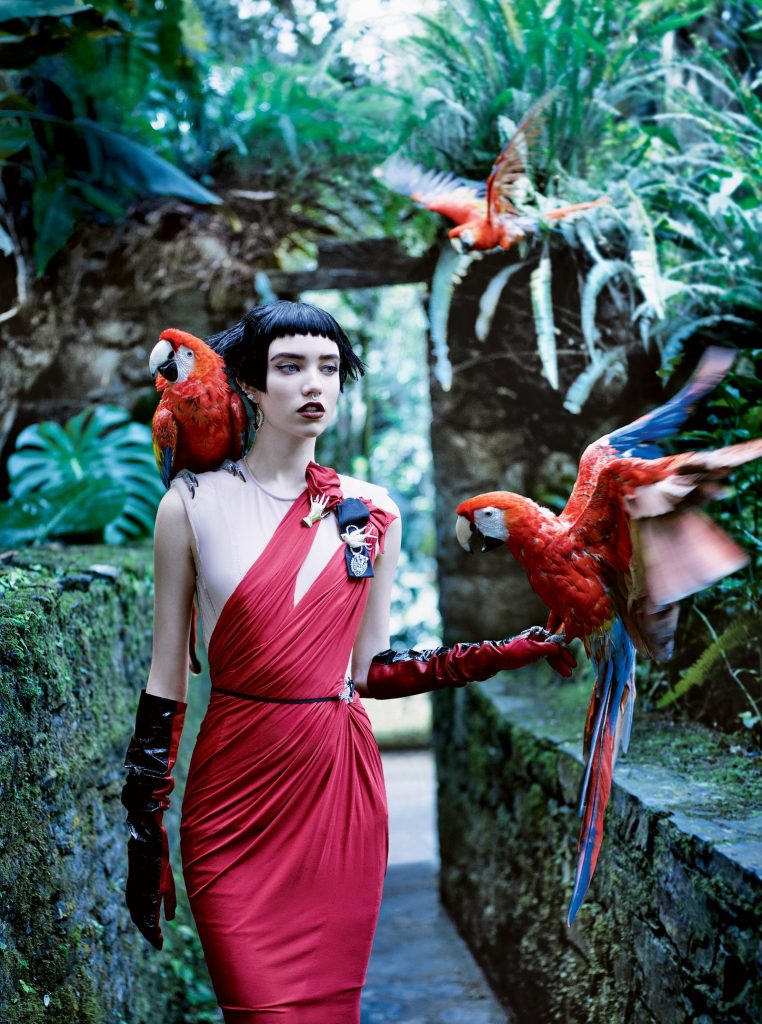
Model: Grace Hartzel. Photos by Mikael Jansson. Location: Las Pozas. Vogue, March 2016.Model: Grace Hartzel. Photos by Mikael Jansson. Location: Las Pozas. Vogue, March 2016.
Grace Hartzel on set with Vogue in Mexico’s Las Pozas.
Spaceship Earth is the true, stranger-than-fiction, adventure of eight visionaries who in 1991 spent two years quarantined inside of a self-engineered replica of Earth’s ecosystem called BIOSPHERE 2. The experiment was a worldwide phenomenon, chronicling daily existence in the face of life threatening ecological disaster and a growing criticism that it was nothing more than a cult. The bizarre story is both a cautionary tale and a hopeful lesson of how a small group of dreamers can potentially reimagine a new world.








 Punk Tropicale