
It’s so easy, while trapped in the infinite Instagram scroll of other people’s things, to be seduced by a plant’s trendiness to think that I actually want to grow it. Or worse, for me to want to make my own plant collection a clone of some influencer/educator. This post is me stepping away from what I think is aesthetically beautiful on someone else’s timeline and delving deeper into what sort of plant filled sanctuary I wish to create.
When I close my eyes and envision a beautiful green misted fantasy, what do I see?
- Henri Rousseau’s The Dream
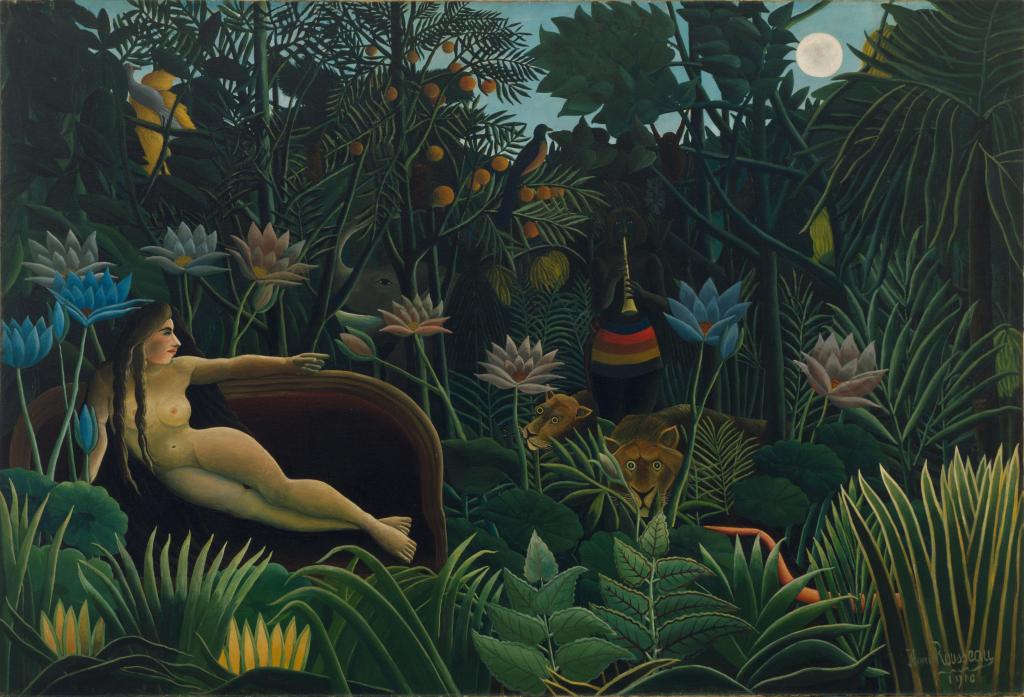
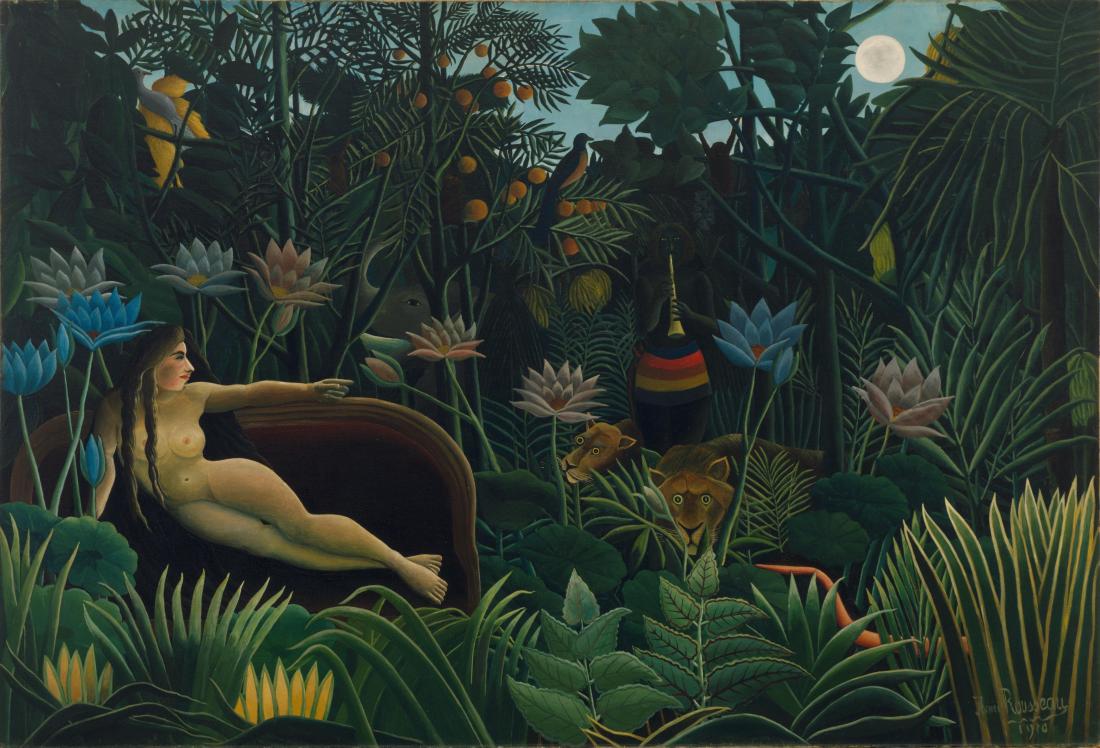
Former customs agent turned fine artist Henri Rousseau didn’t leave Paris for inspiration when he painted his imagined versions of tropical forests in the late 1800’s and early 1900s. According the Anne Tempkin, the chief curator of painting and sculpture at the Museum of Modern Art in NY where you can see the painting in person, “[Rousseau] got all of his knowledge for the horticultural details by going to the botanical gardens in Paris, by going to the zoos to look at the various birds and animals, by reading lots of magazines that came out at the time that were charting the sort of exotic places that travelers and explorers were just starting to go to on other continents.”
The Dream is perhaps the best distillation of my imagined plant-filled paradise: me in effortless repose ensconced amongst the plants, especially intrusively lush, large leafed plants. For a real life example of what day to day life surrounded by so much green would be like, I look to Hilton Carter’s beautiful Baltimore home and studio.
My picks: Gunnera spp., Strelitzia nicolai (white bird of paradise), Strelitzia reginae ˆ(orange bird of paradise), Heliconia wagneriana, Heliconia rostrata (lobster claw), Vriesea splendens (flaming sword bromeliad), Tillandsia cyanea (pink quill), Musa acuminata (dwarf Cavendish banana), Colocasia esculenta (taro), Dieffenbachia spp., Spathiphyllum wallisii ‘Sensation’ (a large leafed peace lily), Monstera Deliciosa, Aglaonema nitidum (Chinese evergreen), Medinilla magnifica (I know this plant is going to be a heartbreaker, but I want to try anyway).

- Silly Seussian Plants
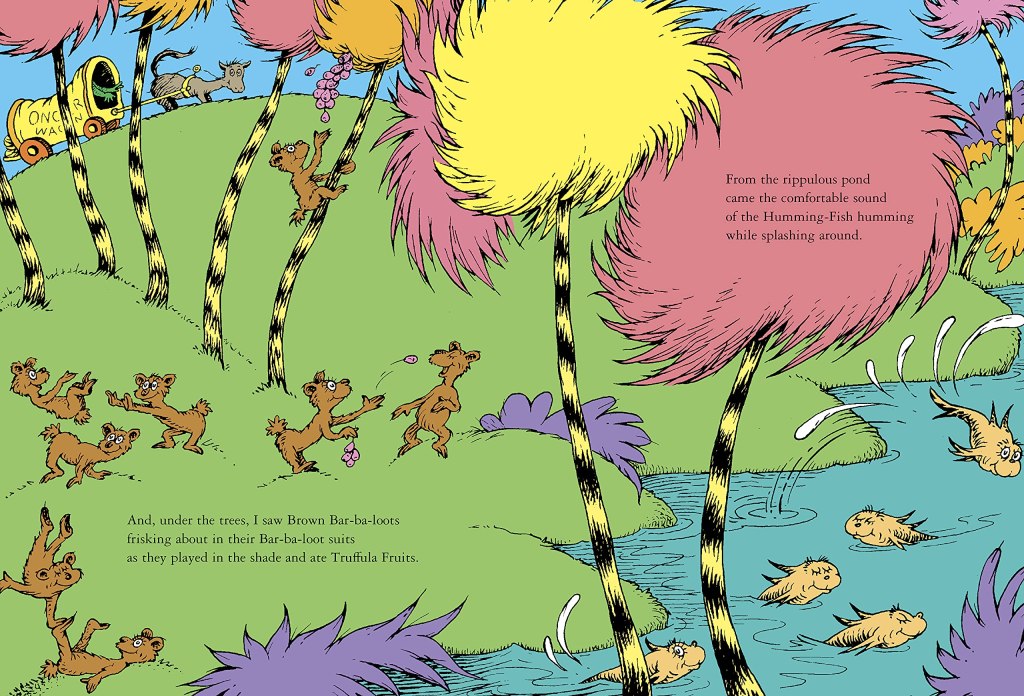
In his 2001 supposed “style bible for indoor plants” Potted, landscape and garden designer Andy Sturgeon went on a harrumphing judgemental tear about flamboyant plants. My immediate thought was, “But those are the best ones, of course!” I want a little whimsy in my plant collection, where a few specimens make me giggle or even laugh out loud when I look at them.
My picks: Acalypha hispida (chenille plant), Asparagus densiflorus ‘Myersii’ (foxtail fern), Calliandra surinamensis (powder puff plant), Mimosa pudica, Huernia zebrina (Lifesaver cactus), Psychotria elata (Hot Lips), and Kochia scoparia.
- The Oxygen Garden in Danny Boyle’s Sunrise

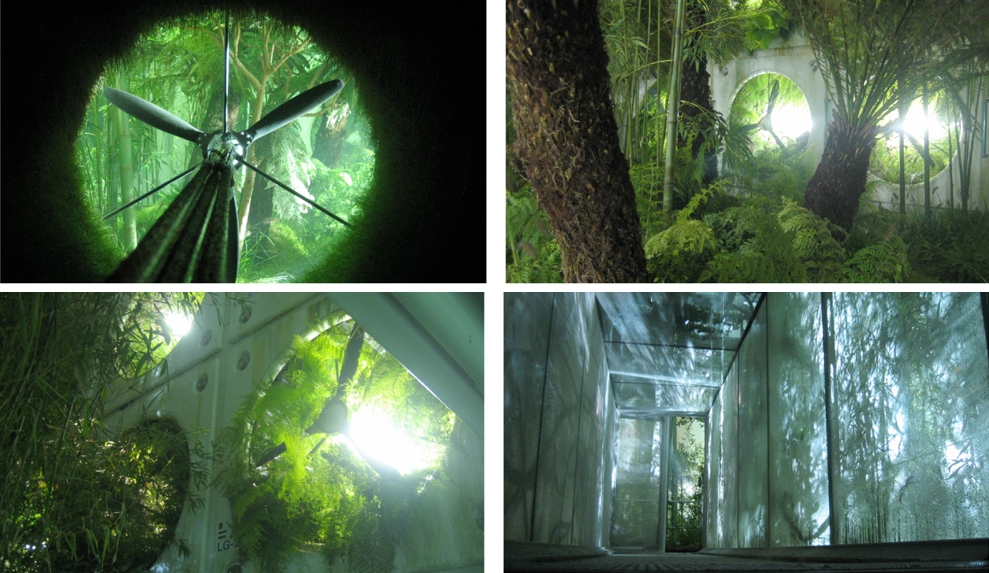
Sunrise is my least favorite of Danny Boyle’s films. The casting in the sci-fi thriller was top notch, but the script was a mess, the science flawed, the crew mix seemingly optimized for max discord, and character deaths utterly pointless. Ugh, it sucked. But it is still one of the few space-based sci-fi movies that incorporates living plants into mission critical processes on board a spacecraft. There is an “Oxygen Garden” responsible for producing and replenishing the ship’s air supply. The garden’s appearance was brief — sadly, it was doomed from the start– but it was interesting to think about the other living beings we could bring out into the stars with us. I was also struck by Corazon, the botanist played by Michelle Yeoh, and her tender care and obvious devotion to the garden.
My picks: I don’t have any specific plants in mind for this one. My initial choices were the over-hyped “air-purifying plants.” Unfortunately, the marketing claims seem to be vastly overblown, because of course, they are.
- Yakushima Forest as referenced in Princess Mononoke and the Hoh Rain Forest
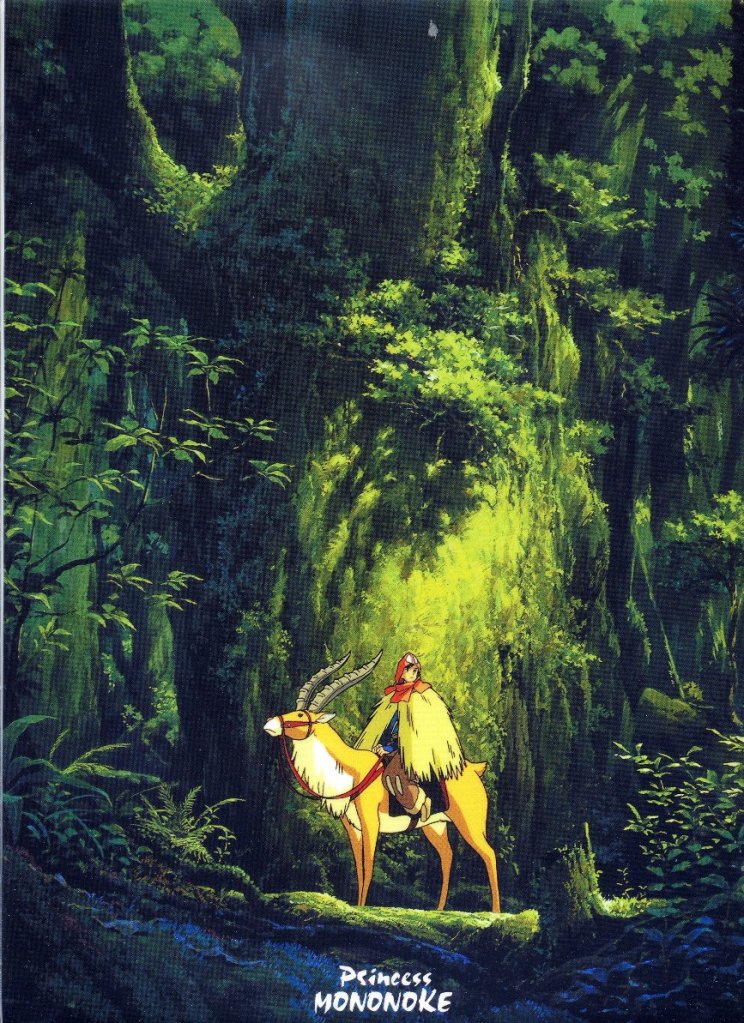

Princess Mononoke is the only of Hayao Miyazaki’s films that I truly love, partly because I prefer my anime with at least a touch of ultraviolence, but mostly because of the film’s portrayal of the forest, its spirits, mysteries, and generosity. The forest as rendered in the film heavily references the subtropical evergreen forest of Yakushima in Southwestern Japan. Yakushima is home of one of the world’s oldest trees, the Jōmon Sugi, a Japanese cedar estimated to be at least 2,000 years old.
By contrast, my oldest plant is a 12-year old Dracaena marginata called Muppet. My plants are babies, saplings, and seedlings, but I want a connection to wisdom and awe that one can feel when in the presence of long-lived beings. For now, I’m making due with plants that can (theoretically) live and grow with me for decades even if they will never achieve the same majesty of a specimen found in its natural environment.
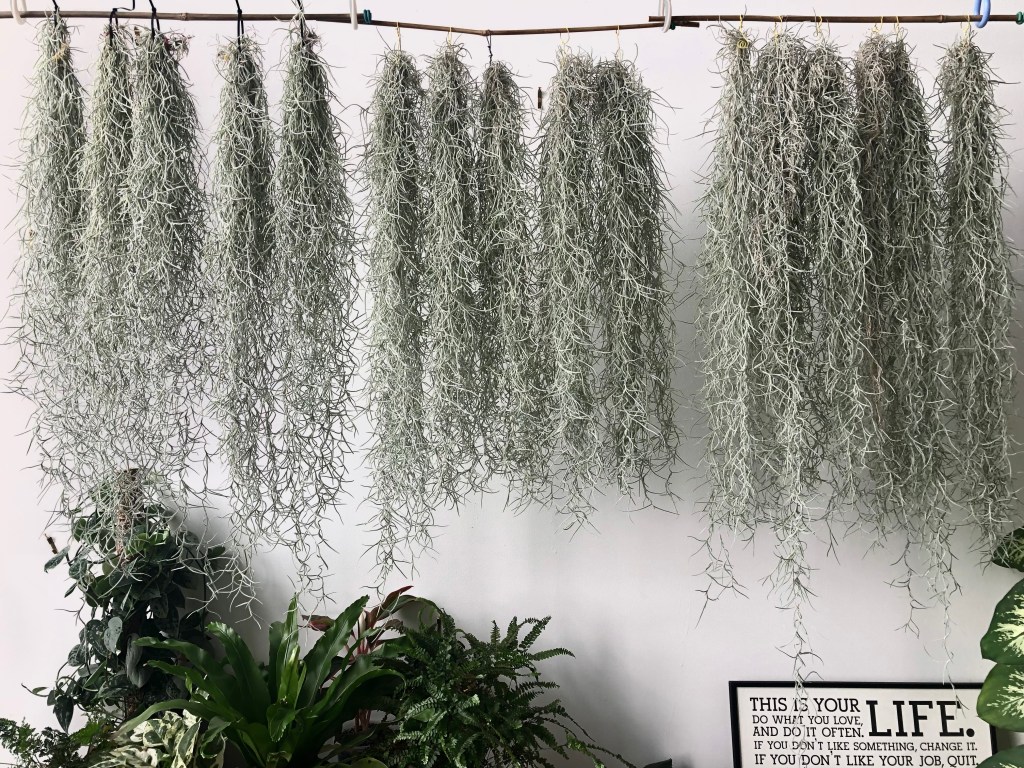
My picks: Ficus elastica, Ficus religiosa, Crassula ovata, Zamioculcas zamiifolia, Philodendron spp. To mimic a feeling of a primordial forest, I’m working on a long term project of growing 3-6 foot long Spanish moss (Tillandsia usneoides) that I can drape in select spots throughout the house. I am very lucky to have a husband who appreciates having an eccentric wife.
- Alien plants and soundstages from Star Trek: The Original Series.

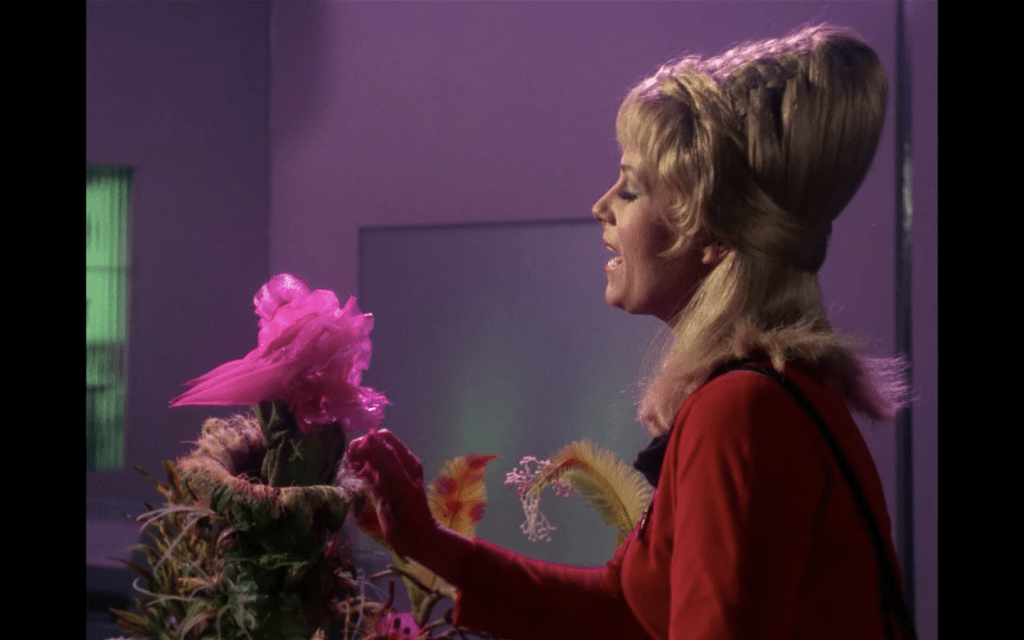


A funny trick of memory is that as technology advances my visual recollections of Star Trek: The Original Series adjust to match the emotional impact the show had on me as a kid. I loved the alien planet sets, with their cheesily rendered plants and boldly gelled skies. Stepping onto another world with the main trio and the away team was fascinating, maybe a little sexy, dangerous even, but definitely entertaining.
My picks: Tillandsia spp., Vanda spp., Phalaenopsis spp., Davallia spp (rabbit foot fern, though I think tarantula leg fern would be more accurate), Aegagropila linnaei (Marimo). Longterm, I want to figure out how to grow foxfire (various species of bioluminescent fungi). Note: an environmental caution on Marimo.

Visit mur végétal pioneer Patrick Blanc’s website. The pictures say it all.
My picks: I’m still doing research on this one, particularly about beneficial insects to keep plant pests at bay and fertilizers to keep plant health up. I’m particularly intrigued by the plant processing techniques of vivarium enthusiasts as they may be applicable. Blanc’s setups seem to be primarily hydroponic where epiphytic plants are rooted between sheets of a non-biodegradable felt substrate. I’m unclear about how much upkeep is required, whether algal growth is an issue, etc. Other layouts and designs are available commercially and I’m leaning towards Florafelt’s Living Walls. The vertical wall on the San Francisco Botanical Garden Bookstore uses Florafelt Pocket Panels. Stay tuned.
- San Francisco Botanical Garden’s Ancient Plants Garden

I like a survivor, and the plants featured in SFBG’s Ancient Plants Garden are the best survivors of all, with these ‘living fossils” first appearing on our planet eons ago.
My picks: Phlebodium aureum (blue star fern) Nephrolepis spp, Adiantum spp. (maidenhair fern) Platycerium bifurcatum (staghorn fern), Cycas revoluta (Sago palm), Blechnum gibbum (dwarf tree fern) or Dicksonia antarctica (Australian tree fern), Araucaria heterophylla (Norfolk Island Pine).
- Longwood Gardens’ Silver Garden
The Silver Garden at Longwood Gardens in Pennsylvania features grey-blue (glaucous) and silvery plants from arid regions all over the world, including cacti and Tillandsia from the Americas, South African succulents, and a whole slew of Mediterrean plants to name a few. Under similar climatic pressures, many of these plants independently developed the same strategies to cope with dry environmental conditions and searing sunlight.
My picks: Carpobrotus edulis or Carpobrotus chilensis (highway ice plant), Crassula capitella “Pagoda village’, Dichondra argentea, Tillandsia tectorum, Aloe barbadensis (aloe vera).
- The children’s “Paradise” in Susan Coolidge’s What Katy Did, particularly the bower.
Nature’s embrace. In the absence of land to create an outdoor garden and a protected bower, I want to use some of my more unwieldy plants to create a little private reading/writing nook. I want one spot where I can tuck myself into and be completely surrounded in nature’s comforting embrace. The only signal that I am there would be Lang Elliott’s recordings from his Pure Nature app and maybe a curse now and again, as yet another fungus gnat tries to fly up my nose.
- Sanctuary Grove and Freya’s fantastical symbiosis with Chaurli in God of War (PS4)
Sanctuary Grove, Freya, and Chaurli in God of War 4 (2018). Jump to 6 minutes 25 seconds.
Up to this point, most of the plants listed above mainly possess green foliage of various hues, saturations, and brightness, but green all the same. I would like a pocket of my collection where the foliage boasts of other colors, like reds, golds, and purples!
My picks: I’m still on the lookout for plants as the most readily available option, coleus or crotons, don’t appeal to me for whatever reason. Strobilanthes dyeriana (Persian shield), Oxalis triangularis (purple shamrock), Begonia rex-cultorum, Stromanthe sanguinea ‘Triostar’.
What do you think of when you imagine a plant sanctuary? Let me know in the comments.






 Punk Tropicale